
Construction Tech Trends for 2026: Revolutionizing the Industry
The construction industry stands at the threshold of a technological revolution in 2026, with innovations promising to enhance safety, productivity, and efficiency. As we delve into this transformative year, several construction technology trends emerge as pivotal forces shaping the future of the sector.
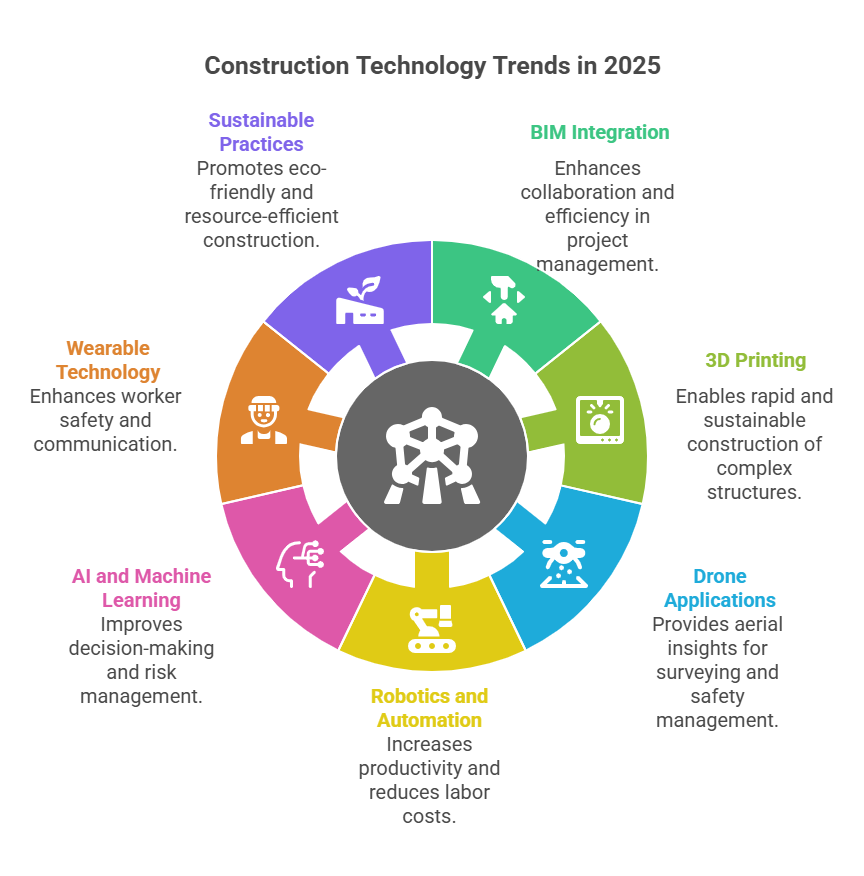
1. Artificial Intelligence and Robotics
Artificial Intelligence (AI) is spearheading changes across construction processes, from project planning to on-site operations. AI-driven analytics are improving project forecasting and resource allocation, while robotics are increasingly taking over repetitive tasks. This shift not only reduces physical strain on workers but also boosts overall productivity by allowing human labor to focus on more complex problem-solving activities. Robotic systems are now being utilized for tasks such as material handling, bricklaying, and rebar tying, showcasing the potential of AI and robotics to redefine traditional construction roles and workflows.
2. Modular Construction
Modular construction is gaining traction as a preferred building method due to its focus on speed and efficiency. By utilizing standardized, digitally planned components manufactured off-site, this approach allows for quicker assembly on-site, minimizing disruptions and delays. The logistics of modular construction have improved, making it a more reliable and cost-effective option for large-scale projects in 2026. This method effectively addresses skilled labor shortages and reduces material waste, positioning modular construction as a sustainable solution in an industry often scrutinized for its environmental impact.

3. Cloud-Based Mobile Workflows
The integration of cloud technology is revolutionizing how teams access and share project data. In 2026, cloud-based mobile workflows will empower construction teams to access real-time information from anywhere, facilitating quicker decision-making and improved coordination on-site. With cloud platforms, supervisors and engineers can work directly from the field, ensuring that everyone operates with the latest data, ultimately reducing delays and inefficiencies.
4. IoT and Wearable Technology
The Internet of Things (IoT) is enhancing safety and operational efficiency by providing real-time data about worker conditions, machinery status, and environmental factors. Wearable technology, equipped with sensors, is becoming increasingly common on construction sites. These devices can monitor workers’ physical states and alert teams to potential hazards, effectively promoting a culture of safety. In 2026, the push for smart wearables will likely expand, integrating more advanced analytics to inform risk management strategies.

Moving Forward
As these technologies continue to evolve, the construction industry is set to benefit from increased efficiency, sustainability, and safety measures. The integration of AI, robotics, modular construction methods, cloud workflows, and IoT will not only enhance productivity but also prepare the industry to meet future challenges head-on.
For a more in-depth exploration of these trends and their impacts, visit Viact.

As the construction sector embraces these advancements, stakeholders must remain adaptable and open to innovation, ensuring they harness the full potential of technology to redefine the building landscape in 2026 and beyond.