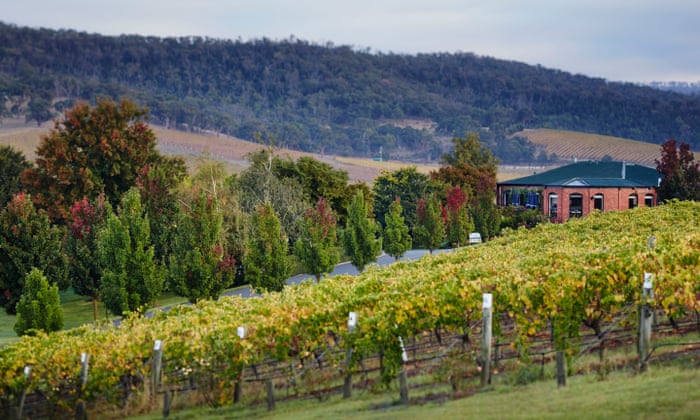
In the heart of California's wine country, a quiet revolution is bubbling. The age-old art of winemaking, steeped in tradition and craftsmanship, is opening its doors to the cutting-edge world of artificial intelligence (AI). Imagine the rolling vineyards of Napa Valley not just basking in the sun but also humming with the digital whispers of AI tech. From optimizing irrigation to predicting harvest yields, AI is changing the game for viticulturists, offering a blend of efficiency and sustainability that traditional methods can't match.
The AI-Driven Vineyard
Picture this: Tyler Klick, a viticulturist with Redwood Empire Vineyard Management, stands in a Chardonnay vineyard in Geyserville, California, gesturing toward an Agrology Arbiter system. This AI-driven tool is not just tracking soil temperature and respiration but also ambient conditions, providing real-time data that can make or break a season's yield.
The Agrology Arbiter system is part of a new wave of agricultural tech that promises to transform how vineyards operate. By closely monitoring soil and vine conditions, this technology helps farmers efficiently allocate resources like water and fertilizers, ensuring that every drop and granule counts. This isn't just about cutting costs; it's about nurturing the land with precision, reducing waste, and promoting sustainability.
Tradition Meets Innovation
While AI is making waves, it's not about replacing the human touch that's so integral to winemaking. Instead, it's about enhancing it. As John Deere demonstrates with its "Smart Apply" technology, AI can help growers apply material for crop retention by using sensors and algorithms to sense foliage on grape canopies. This means fewer chemicals and a healthier environment.
Sean Sundberg, John Deere's business integration manager, highlights how this technology allows farmers to manage vast acres with unprecedented accuracy, ensuring that every grape is nurtured to perfection. The goal is not just efficiency but also maintaining the delicate balance of tradition and innovation that defines the wine industry.
The Cost of Progress
While the promise of AI is enticing, it's not without its hurdles. Angelo A. Camillo, a professor of wine business at Sonoma State University, points out that smaller vineyards face significant challenges. Family-owned operations, which make up about 80% of the American wine business, often struggle with the high costs of implementing AI. A robotic arm to assemble wine pallets can set a vineyard back by $150,000, a steep price for many small producers.
Despite these costs, the pressure to adapt is mounting. As Camillo notes, the industry is at a crossroads where embracing AI could mean the difference between thriving and merely surviving.
Sustainability and Efficiency
The environmental benefits of AI in vineyards are hard to ignore. By optimizing water usage and reducing the need for fertilizers and pesticides, AI helps create more sustainable agricultural practices. These technologies not only safeguard the environment but also improve the quality of the wine, ensuring that each bottle is crafted with care and precision.
Farmers like Tyler Klick are not just adopting AI for its efficiency but also for its potential to revolutionize sustainability in winemaking. The ability to monitor and adapt to environmental conditions in real-time means that vineyards can respond quickly to changes, protecting crops and yields.
The Future of Winemaking
As we look to the future, the integration of AI in the wine industry is set to deepen. The technology promises to bring new levels of precision and insight, helping vintners make more informed decisions. This is not just about technology for technology's sake but about harnessing its power to preserve the essence of winemaking.
Farmers, as history shows, are adaptive and resilient. Just as the tractor once replaced horses and mules, AI is poised to become a trusted partner in the vineyards of tomorrow. The journey may be challenging, but the rewards—a more sustainable and efficient industry—are well worth the effort.
Embracing Change
The wine industry stands on the brink of a new era, one where tradition and technology walk hand in hand. As AI continues to evolve, its role in winemaking will only grow, offering new opportunities for innovation while respecting the time-honored practices that have defined the craft for centuries.
In this dynamic landscape, the message is clear: embracing AI is not just about keeping pace with technological advancements but about shaping the future of winemaking. It's about ensuring that the rich tapestry of flavors and aromas continues to delight connoisseurs and casual drinkers alike.
By integrating AI, vineyards can unlock new potentials, ensuring that the art of winemaking remains vibrant and relevant in a rapidly changing world. Whether you're a small family-owned operation or a large commercial vineyard, the time to embrace AI is now. The future of winemaking is here, and it's as promising as a sun-drenched Californian vineyard at harvest time.