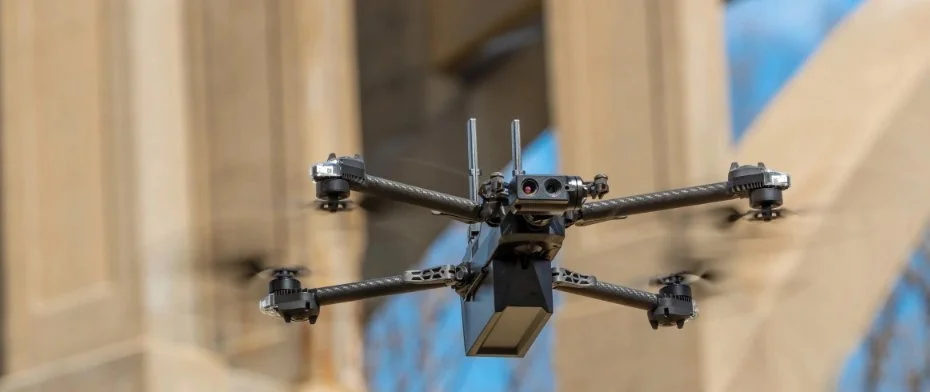
The Rise of Autonomous Drone Inspections: How DroneDeploy's FAA Approval is Transforming Infrastructure Monitoring
In a landmark decision that could redefine the future of aerial inspections, DroneDeploy, a leader in drone technology, has secured nationwide approval from the U.S. Federal Aviation Administration (FAA) for conducting beyond visual line-of-sight (BVLOS) inspections. This approval enables DroneDeploy's clients to remotely deploy and manage autonomous drones for inspecting critical infrastructure, marking a significant leap forward in the capabilities and applications of drone technology.

The New Era of Drone Inspections
The FAA's green light for BVLOS operations is a pivotal advancement, especially in the realm of infrastructure management. Traditionally, drone operations were limited to the operator's line of sight, a constraint that has now been effectively lifted for DroneDeploy. This change allows for more extensive and efficient coverage, essential for inspecting vast infrastructure projects like pipelines, power lines, and construction sites.
DroneDeploy's platform is already a trusted tool among over 80% of the top 50 U.S. general contractors. These contractors, alongside leading hyperscale data center developers, rely on DroneDeploy's drones for aerial monitoring and data analysis, which are crucial for ensuring projects are on track and within budget.
The Technology Behind the Transformation
DroneDeploy's technology provides users with a comprehensive suite of data collection and analysis tools. This includes high-resolution imagery, thermal imaging, and 3D mapping capabilities, all of which are essential for detailed inspections and assessments of infrastructure. The integration of artificial intelligence (AI) allows for the automatic detection of potential issues, such as structural weaknesses or thermal anomalies, enabling proactive maintenance and reducing the risk of costly failures.
The autonomy granted by BVLOS capabilities means that drones can be programmed to follow pre-set flight paths, capturing data and returning autonomously to their base stations. This reduces the need for human intervention, cutting down on labor costs and increasing the frequency and reliability of inspections.
Impact on the Drone Industry
The FAA approval for DroneDeploy is not just a significant victory for the company but also a milestone for the entire drone industry. It demonstrates a growing trust in drone technology and its potential to revolutionize the way we approach infrastructure management. This regulatory milestone is expected to encourage further investment in drone technology, spurring innovation and driving down costs over time.
As drones become more integral to infrastructure management, the industry could see a shift towards more advanced and specialized drones designed for specific inspection tasks. This evolution will likely lead to the development of new sensors and AI models tailored to the needs of different sectors, from construction to energy and beyond.

Challenges and Considerations
Despite the promise of BVLOS operations, there are still challenges that need to be addressed. One of the primary concerns is ensuring the safety and security of autonomous drone operations. This includes preventing collisions with other aircraft and ensuring robust cybersecurity measures to protect against potential hacking or data breaches.
Regulatory frameworks will need to evolve alongside technological advancements to address these challenges. This includes developing standard operating procedures for BVLOS operations and ensuring that all operators are adequately trained and equipped to manage these sophisticated systems.
The Future of Drone Technology
Looking ahead, the future of drone technology appears bright, with endless possibilities for innovation and application. As drones become more autonomous, they will likely play a critical role in various industries, from agriculture to logistics and public safety.
For companies like DroneDeploy, the focus will be on expanding the capabilities of their platforms, integrating more advanced AI and machine learning algorithms to provide deeper insights and more predictive analysis. This will not only enhance the efficiency of infrastructure inspections but also pave the way for new applications and industries to benefit from drone technology.
In conclusion, DroneDeploy's FAA approval for BVLOS inspections marks a new chapter in the evolution of drone technology. By enabling more comprehensive and efficient inspections, it sets a precedent for future advancements and underscores the transformative potential of drones in modern infrastructure management.
For more information on drone technology and its implications, visit Impact Lab.