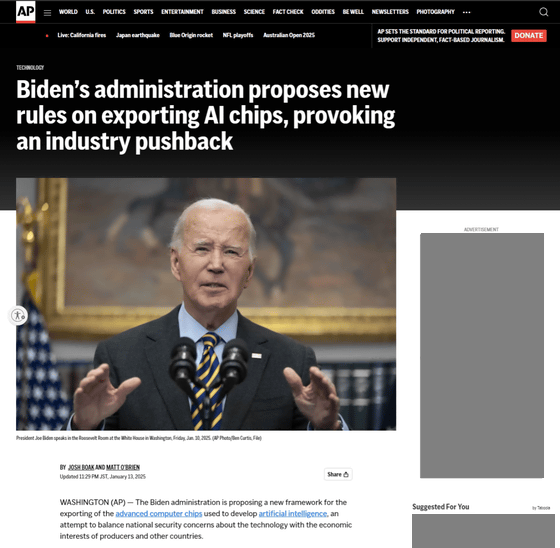
Challenging Export Rules: The Impact of AI Chip Regulation
The Biden administration has introduced new export controls on advanced artificial intelligence (AI) chips, a move designed to safeguard national security while attempting to maintain economic balance. These regulations limit the distribution of these critical technological components to approximately 120 countries, igniting a debate about their potential repercussions on the global technology market.

A Strategic Shift in Tech Export Policy
In recent months, national security concerns have increasingly driven changes in U.S. technology export policies. The new rules reflect a strategic shift by the Biden administration to control the flow of advanced AI technology, which could potentially be used in military and surveillance applications by adversarial nations.
This regulatory framework is part of a broader effort to protect the United States' technological edge while preventing sensitive technologies from being used against U.S. interests. The administration's decision underscores the complex interplay between technological innovation, economic interests, and national security.
Economic Implications and Industry Concerns
While the security rationale is clear, the economic implications of these export rules have raised significant concerns among industry leaders. Restricting the access of AI chips to a select group of countries could lead to disruptions in the global supply chain, potentially affecting the competitiveness of U.S. companies in the international market.
The semiconductor industry, a vital part of the U.S. economy, could face challenges in maintaining its market position if key customers are unable to access advanced chips. This concern is echoed by experts who warn that such restrictions might drive foreign companies to seek alternatives, possibly accelerating the growth of AI capabilities in countries like China and Russia.
Balancing National Security and Economic Growth
The Biden administration's policy reflects a delicate balancing act between safeguarding national security and promoting economic growth. The decision to limit chip exports is not just about controlling technology but also about ensuring that the U.S. retains its leadership in AI development.
However, the potential for economic fallout cannot be overlooked. The regulatory constraints might hinder U.S. companies' ability to compete globally, possibly leading to a decrease in market share and innovation. As a result, there is a growing call for policymakers to consider a more nuanced approach that protects national interests without stifling the tech industry's growth.
Global Reactions and Strategic Partnerships
The international community's response to these new export controls varies. Allied nations, particularly those within the European Union and Asia-Pacific, are closely watching how these restrictions will affect their own technology sectors. Strategic partnerships may be re-evaluated as countries seek to secure their supply chains and access to critical technologies.
For instance, nations with burgeoning tech industries might perceive these regulations as an opportunity to develop indigenous capabilities, thereby reducing reliance on U.S. chip manufacturers. This could lead to a more fragmented global technology landscape where regional powers emerge as new leaders in AI development.
The Future of AI Chip Innovation
As the world grapples with the implications of these export rules, the future of AI chip innovation stands at a crossroads. The restrictions could spur a wave of innovation as companies and countries race to develop alternative solutions to advanced AI chips.
In this scenario, the tech industry could witness the rise of new players and technologies, potentially reshaping the landscape of AI innovation. The challenge for the U.S. will be to harness this innovation domestically while maintaining its global leadership in technology.

Conclusion: Navigating a Complex Global Environment
The Biden administration's export rules on AI chips are a testament to the evolving dynamics of technology and national security. While the intent is to protect U.S. interests, the broader implications for the global technology market and economic competitiveness remain uncertain.
Moving forward, it will be crucial for policymakers, industry leaders, and international partners to engage in dialogue and collaboration to navigate these challenges. Only through a concerted effort can the balance between security and innovation be achieved, ensuring that technological advancements continue to benefit society at large.